
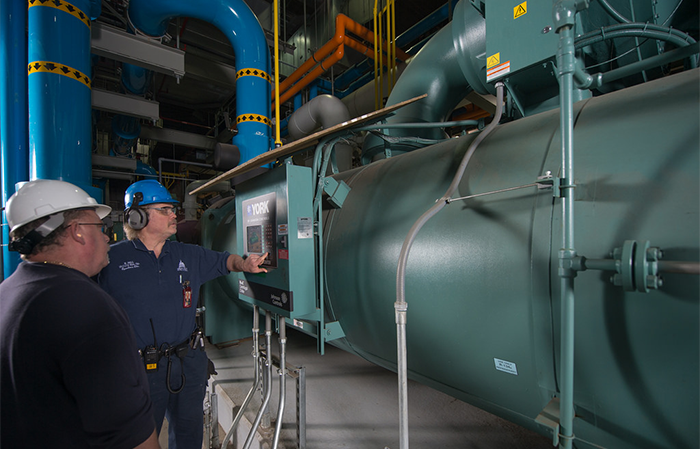
An HVAC system’s efficiency, dependability, and operating expenses are greatly impacted by the choice of chiller, making it an important choice. Of all the variables that affect this decision, climate is one of the most important. The performance and applicability of various types of chillers can be affected by a location’s ambient temperature, humidity levels, and seasonal variations. To guarantee the best system performance and energy efficiency, HVAC designers and facility managers must understand how surroundings affect chiller choices. This article discusses how different climates affect the choice of HVAC systems for chillers.
Ambient Temperature and Chiller Efficiency:
One of the most important weather-related factors influencing chiller performance is ambient temperature. Air-cooled chillers typically perform better in colder climates with lower ambient temperatures. Because of the chiller’s increased ability to reject heat, the compressor runs less hard and uses less energy when the outside temperature is lower. For areas with colder climates, air-cooled chillers are therefore an affordable and energy-efficient solution.
However, air-cooled chillers may find it difficult to reject heat effectively in warmer locations with high ambient temperatures. The chiller must work harder due to the decreased temperature differential between the refrigerant and the outside air, which results in higher energy consumption and reduced efficiency. Water-cooled chillers, which employ cooling towers and water as the heat rejection medium, are frequently more efficient in these types of climates. Because water has a greater heat capacity than air, water-cooled chillers can continue to operate efficiently in high temperatures.
Humidity Levels and Chiller Operation:
The selection and performance of chillers are also influenced by humidity, another crucial environmental component. The latent heat load of HVAC systems is increased by high humidity levels because it takes more energy to remove moisture from the air. The sizing and operation of chillers can be greatly impacted by this increased load, especially in areas with tropical or subtropical temperatures.
Inadequate dehumidification and increased interior humidity might result from systems that are insufficient for the latent load, making it difficult to maintain indoor comfort levels. The inhabitants of the building may become uncomfortable as a result, and there may also be problems with mould and mildew growth.
Seasonal Variations and Chiller Flexibility:
The choice of chiller can also be influenced by seasonal changes in the weather, especially in areas where summer and winter temperatures differ significantly. The cooling load requirements might vary significantly year-round in climates with hot summers and freezing winters. This variation demands a chiller system that can adjust to shifting circumstances without losing effectiveness.
Using modular or numerous chiller systems is one way to handle seasonal fluctuations. The system may scale up or down in response to the seasonal cooling load thanks to modular chillers’ ability to make incremental capacity modifications. All of the units can be used to fulfil the increased demand during the summer’s peak, while some of them can be switched off during the cooler months to save energy.
Altitude and Atmospheric Pressure:
Although it isn’t directly related to climate, height might affect chiller efficiency and ought to be taken into account when choosing a system. Lower air pressure at higher altitudes can have an impact on the chiller’s heat exchange mechanism. Higher elevations cause possible efficiency losses in air-cooled chillers because of the decreased air density, which lowers the chiller’s ability to reject heat.
Water-cooled chillers might be a better fit in high-altitude areas since they reject heat using water instead of air. Furthermore, while sizing chiller components like compressors, fans, and heat exchangers, HVAC designers might need to take altitude into consideration to make sure the system can function properly in the given circumstances.
Environmental Rules and Sustainable Development Objectives:
Regional differences in sustainability objectives and environmental laws are also connected with climate factors. Energy use and environmental effects become serious issues in regions that frequently experience high humidity or harsh temperatures. It is crucial to choose a chiller that complies with local energy efficiency guidelines, refrigerant laws, and climate-specific requirements.
For instance, high-efficiency ratings or the usage of low-GWP (Global Warming Potential) refrigerants may be required for chillers in areas with strict environmental requirements. These systems support larger sustainability programs and lessen carbon emissions. Furthermore, the chiller system’s environmental performance can be further improved by integrating renewable energy sources, like solar or wind, especially in areas where the conditions are favourable for the generation of renewable energy.
FAQs:
1. What Advantages Do Chillers Offer When Combined with Renewable Energy Sources?
Chiller integration with renewable energy sources, like solar or wind power, can drastically lower the system’s operating costs and carbon footprint. Chillers can be directly powered by renewable energy or used to balance energy use during times of high demand.
2. How Can Data Analytics Be Used to Improve Chiller System Performance?
By examining operational data, data analytics may estimate maintenance requirements, find inefficiencies, and improve control strategies, all of which can improve chiller performance. Analytics platforms can offer insights into load profiles, equipment health, and trends in energy usage by gathering data from sensors and control systems.
3. What Effects Does Climate Change Have on the Design and Function of Chiller Systems?
The design and operation of chiller systems can be impacted by climate change in a number of ways, including temperature profiles, the frequency of extreme weather events, and the demands placed on cooling systems. Elevated outside temperatures have the potential to diminish the effectiveness of air-cooled chillers and enhance energy usage. To address these conditions, it could be necessary to construct chiller systems with a bigger capacity or better cooling techniques.
4. How Do I Manage Water Usage in Water-Cooled Chiller Systems?
For water-cooled chiller systems to be sustainable and cost-effective, water usage management is essential. A few important tactics are utilizing water treatment systems to lower breakdown rates, optimizing cooling tower operation to minimize water evaporation, and putting in place systems for water reuse or recycling. Real-time monitoring of water quality and use can be used to spot inefficiencies and areas for development.