
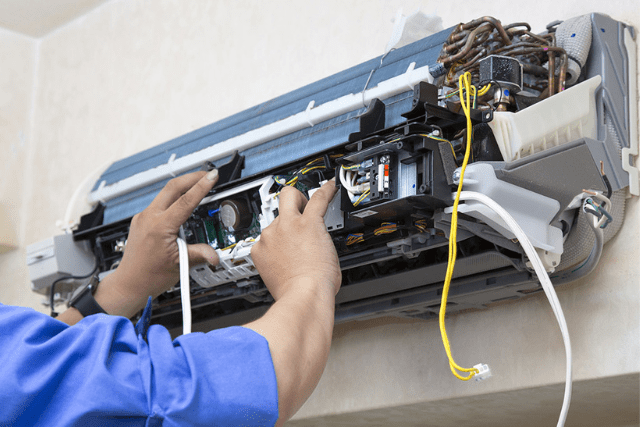
Such facilities operate 24/7 with massive amounts of data being processed, and accordingly, they emit a lot of heat. This heat would easily accumulate in an absence of adequate air conditioning leading to equipment malfunction and closure of services.
The Reason Why Cooling Is Important In Data Centers:
The servers are the core of any data center — it is a powerful machine, which is capable of processing, storing, and transmitting data at all times. These servers use lots of electricity and consequently, they generate heat as a by product. When a large number of these machines are running in a compact area, the heat produced by them may become dangerous within a very limited amount of time. When unregulated, excessive heat may cause performance degradation, decrease equipment life, and even cause unexpected system failures.
The air conditioning systems ensure the creation of a stable environment in which temperature and humidity are carefully maintained. That is not only the question of preventing overheating, but also of maintaining the performance. Such minor changes in temperature may influence the efficiency of servers.
Types of Air Conditioning Systems in Use:
Data centers need special cooling systems, which differ largely than ordinary air conditioner used in homes. Such systems are designed to operate continuously and capable of dealing with significantly larger heat loads.
- Computer Room Air Conditioning (CRAC) is one of the most widespread and typical ones where refrigerants are utilized to cool the air and ensure even distribution over the entire facility.
- Computer Room Air Handling (CRAH) is another popular system that is based on a chilled water cooling mechanism and is commonly thought to be more energy-efficient when it comes to large-scale use. Besides these, they have precision air conditioning mechanisms to ensure accurate temperature and humidity.
These systems are very dependable and adapt fast to alterations in heat load. Higher-tiered data centres are also starting to implement liquid cooling technologies whereby, coolants are pumped in to directly absorb the heat by the server components. This approach is especially applicable to the high-performance computing environments in which the conventional air cooling can be not adequate.
Energy Use and Its Problems:
Energy consumption is one of the largest issues related to air conditioning in the data centers. Cooling systems can consume a significant share of the amount of energy consumed in a facility, occasionally up to 40 to 60 percent. Such high power consumption does not only raise the cost of operations, but also contributes immensely to the environmental effect particularly when the electricity is produced using fossil fuels.
More data centers are being created, as well as the expansion of existing ones, as the demand of digital services increases. This causes even more energy consumption on cooling. A sustainable management of this demand has become a priority of the tech industry. The companies are currently working on enhancing efficiency of their cooling systems and considering other possibilities of minimizing the use of energy without undermining its performance.
Smart Cooling Strategies:
Data centers are exploring smarter cooling methods in order to overcome the problem of energy consumption. The best methods are the use of cold aisle and hot aisle configurations. In such a structure server racks are laid in alternate rows and the cold air flows into the front of the servers and the hot air flows out of the back. This separation does not permit mixing of hot and cold air, and as a result the cooling systems are more efficient.
The use of containment systems to enclose hot or cold aisles in order to enhance airflow regulation is also an important strategy. This minimizes the level of work to be done by air conditioning systems and assists in ensuring that temperatures are always maintained across the facility.
Moreover, most data centers have adopted the new technology of artificial intelligence-based advanced monitoring systems to monitor the real-time changes in temperature and manipulate the cooling system accordingly.
Cooling Technology Advancements:
Technology is continuously involving and the way to cool data centres are too. Among the most promising method is liquid cooling as it is much more efficient than air in transferring heat. These systems can take the heat away at the source by either water or special coolants so that large scale air conditioning is not necessary. Immersion cooling goes even further and places servers in non conductive liquids that are more effective in absorbing heat.
Free cooling is another technological development that involves the use of outer air to minimize the use of mechanical cooling systems. This is especially useful in cooler climates where natural temperatures can be used to keep the data centers in ideal conditions. Not only are these developments more efficient, but they also make cooling systems less detrimental to the environment.
Conclusion:
Air conditioning is not a support system to the data centers it is rather a core element which guarantees the stability and reliability of the modern technology infrastructure. By avoiding overheating to enhancing energy efficiency, cooling systems are crucial in ensuring smooth operation of the digital services. Although things like excessive energy use and environmental impact are still there, constant innovations and more intelligent approaches are aiding in reducing these concerns.
FAQs:
How Much Important Are Air Conditioning Systems In Data Centers?
Air conditioners are of much importance to data centres as they aid in avoiding overheating of the facility implying that servers and other equipment can keep on functioning safely and efficiently.
Is It Possible For Data Centres To Run Without Needing Air Conditioners?
The safe functioning and operation of traditional data centres is dependent on cooling but the more advanced technologies reduce the use of standard AC systems.
What Are The Ways Being Employed By Companies For Making Cooling Greener?
They are utilizing renewable energy, increasing efficiency, switching to refrigerants that are eco-friendly as well as some of the new cooling technologies are being invented to reduce environmental impact.